Tuesday, April 03, 2018

Tombstone Tuesday – Blandford Church Cemetery in Petersburg, Virginia

I won't have time for research when I visit Richmond for the Virginia Antiquarian Book Fair in a few days. However, I had lovely weather for a visit last fall to Richmond and Petersburg. My goal was to find the general area where my ancestor's brother, Shadrach Maness, was buried.

Shadrach fell early in the siege of Petersburg, killed 23 June 1864. His Civil War record gives no details, but histories of the long battle of Petersburg provide two likely causes of death that correspond to that date. Snipers were picking off soldiers from a distance during that time. There was also a skirmish that day in gullies or trenches outside the Confederate line, a successful attempt to prevent Federal forces from taking the Weldon Railroad.

Oral history says that Shadrach was buried in an unmarked grave near Blandford Church, even though he has a marker in Moore County, N.C. I thought, even if it's unmarked, perhaps there would be a mass grave or some commemorative marker that I could visit.

I had no idea — Blandford Church cemetery is enormous! Stones near the church date back to colonial days and the American Revolution. I caught a caretaker as he was closing for the day and asked him where burials might be for early in the battle. He handed me a rough map, complete with street names, and waved off toward the roads behind the church. "You might try Cemetery Hill," he said. "There's 32,000 of them buried there."

As I walked down the nearest lane, I was surprised by the variety of markers. I've visited large memorial sites, like Gettysburg and Arlington with their small, uniform tombstones. And smaller, old cemeteries with elaborate stones, sometimes with lengthy epitaphs on full-size grave coverings like in Europe. Blandford has both the numbers and uniqueness.

Some of the markers were draped: urns with a draping, or these tall monuments with drapings, but all carved in stone.


These floral headstones had matching footstones.


One grave had its own hobbit-like hill.


There were statues and monuments and mini-parks, including this large arch memorial to "Our Confederate Heroes."


This monument has "Unknown" and the names of states, including North Carolina, carved on its base. Would this be as close as I could get to Shadrach's final resting place?

When I visited last fall, our country was in an uproar about Confederate monuments. This one was built in 1890. I sat in a peaceful gazebo nearby and looked off towards graves that covered the hills in front of me. Why wouldn't people want to pay tribute to thousands and thousands of young men who never got to return home? Shadrach, who volunteered as a substitute for his dear friend Quimby Wallace when the draft was in full force, was only 17 when he died.


Overwhelmed.


I was glad to see a place where various Confederate flags (most with the white background) were still allowed. A cemetery as well as a battlefield, what more appropriate place?

I was equally glad to see the American flag, like these at a marker for World War II and Vietnam veterans. At the end of the War Between the States, "rebels" were given full pardon and the nation was united again. Not always on the same page, as we well know in the 21st century, but our young men and women continue to fight as one under the American flag.


Over near the church, here are some of the early graves with full stones. Some were decorated with Masons marks, some with swords, some with angels.

Different art. Different eras. At Blandford it's as if every individual has freedom to express themselves, yet all end up together in this quiet, peaceful place.

Saturday, March 31, 2018

Searching for an old friend – Howard W. Smith

When our mother passed away in 2005, my sister and I found boxes of things in the attic that had belonged to our father, Austin Saunders, who died in 1971. Since we'd moved soon after his death, the boxes were like a time capsule of Daddy's life. I found a cache of letters from a friend of his, Howard, who'd gone into the Air Force and moved across the country to Washington and Alaska in the 1950s. He called Austin "Leftie." The last letter was a card from Florida.

The one-sided conversation, both humorous and personal, made me wonder what happened to the other letters, the ones Daddy wrote. Could they still exist? I only remember snippets of my father, and would love to read his own words, as fiancé and newlywed, starting out his young life. And wouldn't Howard's children or grandchildren enjoy reading his letters from before they were born?

This month I decided to put my genealogical skills to the test and find out more about Daddy's friend, Howard W. Smith. But – SMITH, mind you! I hoped the middle initial might help. I checked Daddy's alma mater, High Point High School in Guilford County, but found no Howard Smiths within a few years. There were a couple of potential boys in Ancestry about the same age: one growing up in Davidson County and one in Forsyth County. I wonder how they met?

Since publicly available censuses stop at 1940 and online death certificates have different availabilities in different states, finding modern people can sometimes be harder than finding ancestors. Without a newspaper search account that includes other states (even accounts vary about how much they include), I struck out looking for an obituary. I did find one lead, however. Ancestry led me to Find A Grave, with a veteran's gravesite in Michigan. A Howard W. Smith, who served in the Air Force during the Korean era, died in 2005. The stone includes his wife's name, with no death date. She must still be alive.

A few years back, I used Spokeo to find a living relative. I signed up for a free trial and tried possible names for Howard's family. Many of them led to the same address – data and landline phones which could be out of date. I jotted down names (children?) and possible phone numbers. I checked Michigan's GIS for that county and found out the house is still owned by Howard and his wife, more than a decade after his death. Details about the house made me think his wife is alive, but perhaps not in good health.

Nervously, on a Sunday afternoon, I dialed the phone numbers. When I asked for potential children's names, the first man said, "Wrong number" and hung up on me. I didn't get the chance to mention the wife's name. Another number turned out wrong, though more polite. For the last two, I left messages on generic machines, hope dwindling that I'd ever get a response.

What next? I should send a snail-mail letter to that old homeplace address, though I don't really expect a reply. What would you do?


Wednesday, February 28, 2018

Books of 2017

I like to track my reading in Goodreads, though I don't have very ambitious plans when it comes to their annual reading challenge. I read for pleasure, curiosity and self-improvement, and average just over a book a month. Here's a fun infogram from GoodReads. The blank image is The Mysterious Affair at Styles by Agatha Christie. The unpopularity of the charming, vintage children's book Biff, The Fire Dog is because it wasn't in GR's database until I added it.

I did finish some lengthy books in 2017, finally finishing Giovanni Belzoni's 1820 narrative of early discoveries in Egypt (inspired by the miniseries Egypt on Netflix). I'm most pleased about starting and finishing The One-Year Chronological Bible. I never would have chosen the New Living Translation, except I started reading my uncle's copy and loved it. It's as easy to read as a novel, yet has enough translation notes to make me feel comfortable (imo, much better than NIV!).


Nonfiction dominated my reading last year. Outliers was fascinating, my first Malcolm Gladwell. The Millionaire Next Door and Rich Dad, Poor Dad continued my self-prescribed financial education. The latter had good, new-to-me concepts, but needs to be read with several grains of salt. I read (and recommend) an older edition, which included his CPA co-author before they had a falling out. I skimmed a newer version in a bookstore, and it did not strike me as having any useful updates, only annoying format changes. 

I'd seen Brain on Fire in the stores, and checked it out from the library after witnessing an acquaintance experience an unusual seizure. Not only was the book interesting, it also intrigued me as a writer. How do you write a memoir with memory loss? The author used her investigative journalism experience – including doctor's reports, videos, and interviews – to recreate her own story. 

The true crime page-turner The Man in the Rockefeller Suit led me to find and watch a movie (entertaining but the book was better). A TV movie led me to find one of the many biographies on the Bronte sisters (the movie was excellent). The Vanished Library was a bit disappointing. It started off with a fascinating, scholarly history of the ancient library of Alexandria. But later chapters twisted and digressed in such convoluted ways that, when I'd finished the last page, I wasn't sure how it ended. 

After a 2016 of books heavy in science fiction, I only read a couple of mysteries this time, returning to my favourite Elizabeth Peters series and delving into my first Agatha Christie. 

May you enjoy fun and enlightening books in 2018!

This post contains affiliate links.

Wednesday, November 15, 2017

Meeting a Maness cousin

If you've read this blog you know I've been working off-and-on on a book about my great-great-grandfather, Thomas Maness. (Click on the keyword Maness below if you'd like to catch up.) I never did meet Ms. Lessie, a descendant of Thomas' fifth wife who helped solve his identity through DNA. I suspected I might never meet her since she had severe health problems and complicated family, but I'd still like to meet her son and maybe other members of the family. We put these things off, and then it's too late. I read Ms. Lessie's obituary online last spring.

But soon after that, I received an e-mail from Gail, a descendant of Thomas' first wife! I'd seen a photograph she shared on Ancestry of Thomas' second son, Robert "Bob" Maynor (he changed his last name sometime in adulthood). He was a tall man, standing next to his diminutive little wife, Lula. I'd commented that my grandfather, Frank V. Maness, was also tall, and married a 5-foot tall woman.

Gail and I e-mailed a few times and then talked on the phone. We arranged to meet at a public library in the middle of the state (a little bit of caution, there, when meeting strangers).

"Maness" cousins, Gail and Beth
We had a wonderful visit, sharing documents and talking about our relatives. Gail didn't know about Thomas, but she told stories about Bob and Lula's children. Lula lived to be 102. Her obituary lists 38 grandchildren, 85 great-grandchildren and 88 great-great-grandchildren — all descendants of Thomas Maness!

I've been busy all summer with multiple jobs, including some genealogy freelance work, but we hope to get together again, soon. Gail has offered to show me around the cemeteries where her side of the family is buried. We are both the lone genealogy buffs in our families, so it's extra nice to make that connection.

By the way, I look like a crazy person in the photo because I'm so used to being behind the camera, encouraging other people to smile. Maybe I'll figure out this selfie thing someday.

Wednesday, July 12, 2017

Mendenhall Village Fair 2016

In just a few more days, the annual Village Fair will return to Mendenhall Homeplace in Jamestown, N.C.

Tannery Books will have a pop-up shop on the porch of the Dr. Madison Lindsay house. The century-old home (built by 1817) also served as a medical school.


The Village Fair will be Saturday, July 15, from 10 am to 4 pm. Admission is free, including self-tours of the historical buildings.

A carriage sits outside the Pennsylvania-style barn at the 2016 Village Fair. Inside the barn is one of two false-bottom wagons in the country that were used to smuggle slaves along the Underground Railroad.


A blacksmith from High Point Museum plies his trade in the shady yard.


The doctor is IN.

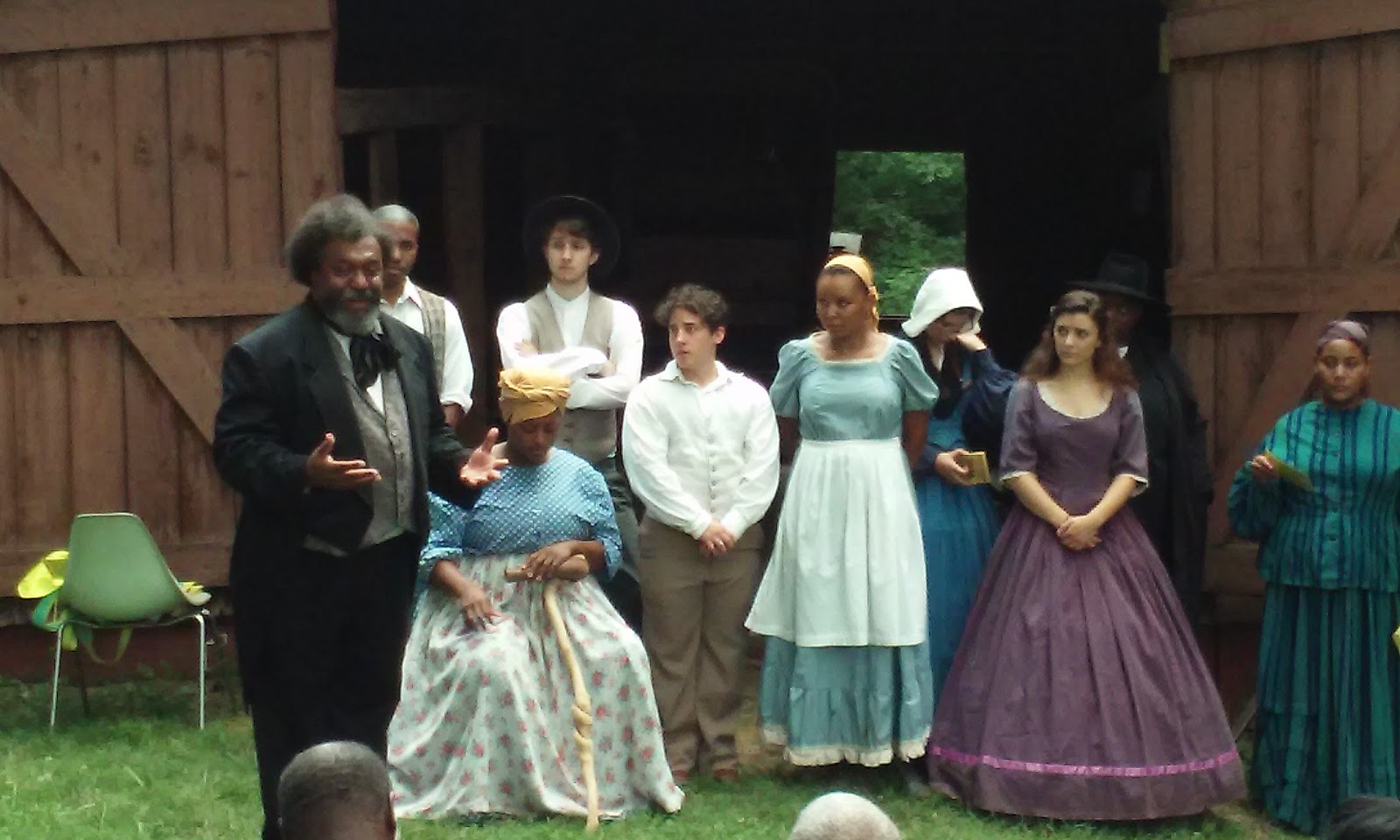
Costumed interpreters provide a sense of life here in the 19th century.


The cast of 'Pathway to Freedom' sings soulful selections from the outdoor drama at 3 pm.


If you're in the central part of the state, Moore County Genealogical Society will have a day of seminars starting at 9 a.m. Saturday, July 15. Topics include researching around burned courthouses and lost records, DNA, and the North Carolina Archives.

Friday, June 09, 2017

Evolution of a Bookshop

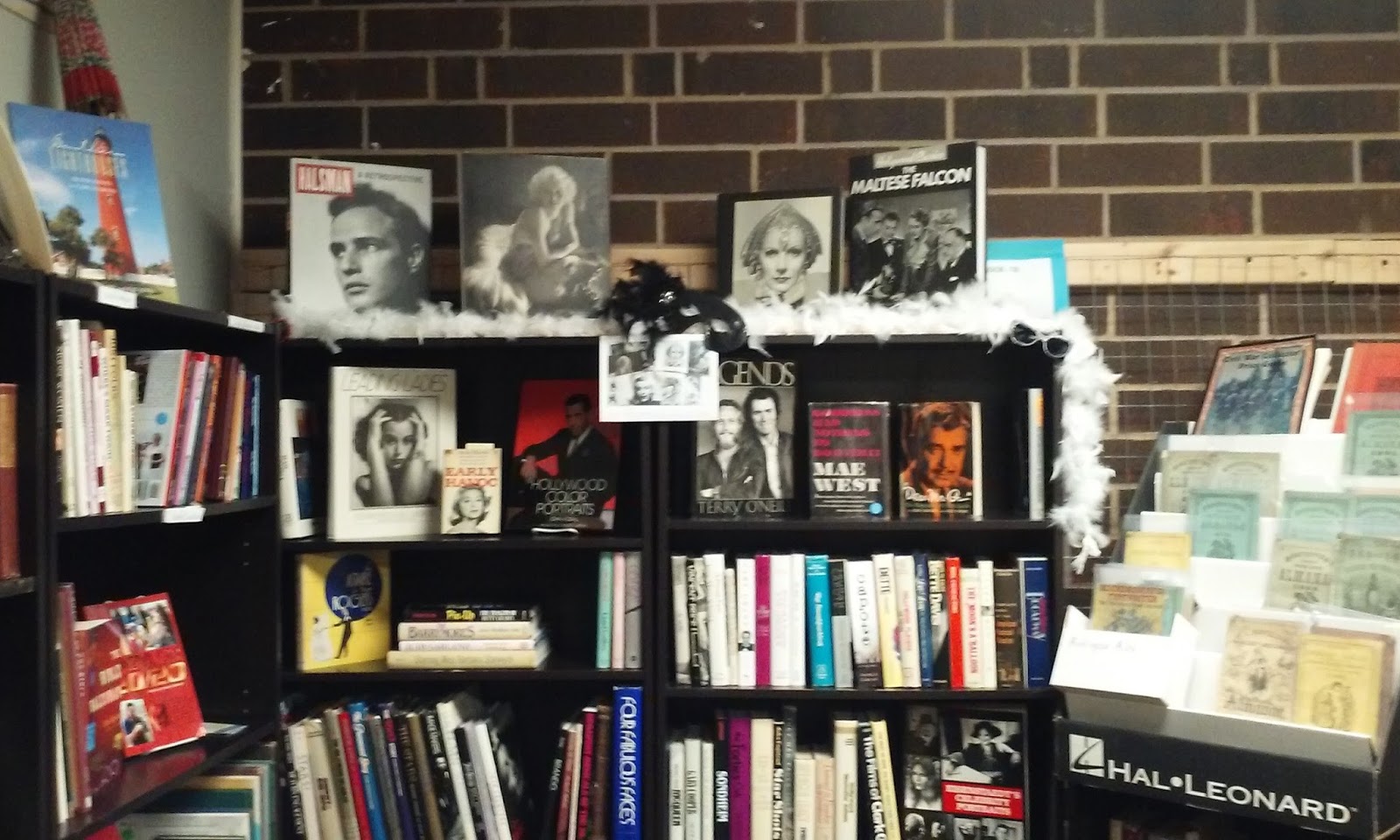
Locals have seen Tannery Books move through different phases since I opened the doors on March 11, 2011. This article on Think Creative Collective outlines the business history of the bookshop as a bricks-and-mortar shop, a small cooperative, pop-up shops, and a permanent booth in an antique mall.

Here are a few pictures and links to go with that history.

Tannery Books - May 2011

Shopping center storefront

A rented space, with a lot of work to do. More about getting ready here and here, but without pictures.
Paint and carpet and getting ready
Opening Day - Boy, does the shop look empty!
My temporary assistant, "the little bookseller" (He's grown quite a bit since this picture!)
Tannery Books at one year (still a little sparse looking)

Book signings
Karen McCollough and my "Mystery" window dressing
Dale Crotts with thrillers
Jennifer Hudson Taylor with Quaker fiction

Partnership or mini-co-op

In 2013, Kathy Carter of Cat's Cradle Books and I teamed up to share the bookshop space with our two separate businesses. Not only did we split the bills, but shared the workload (we both had small part-time jobs), and the inventory of books doubled. Although the small-town bottom line forced us to close later that year, it was a wonderful experiment. A successful online seller, Kathy got to try out a physical shop without long-term leases and such, and I learned a lot from her experience.

Combining shops - February 2013


Pop-up shops

GenFest in 2012
Village Fair in 2012
StellarCon in 2013
Mendenhall Village Fair in 2013

Antique mall or co-op

My first half-booth, 2015
Full-size booth: Tannery Books' fifth anniversary and Star Trek premiere, both in 2016.

Tannery Books booth at Bush Hill Trading Post - April 2017

Who knows what the future holds? Today's world of bookselling requires constant adaptation. If you'd like to follow along, go to Tannery Books website, scroll down and sign up for monthly e-mails.


Thursday, April 20, 2017

Happy Birthday, George Takei!

Happy Birthday to George Takei, born 80 years ago (April 20) in Los Angeles, California.

I can't believe it's been a year since I saw him speak at the Bryan Series in Greensboro, North Carolina. Famous for his role as helmsman Lt. Sulu (later Captain Sulu) in Star Trek, Takei spoke about Gene Roddenberry's groundbreaking vision that went into the series.

Roddenberry envisioned the starship U.S.S. Enterprise as a miniature version of planet Earth. The international crewmembers represented the people and nations of Earth: Captain Kirk was North America, Scotty was Britain or Europe, Sulu was Asia, and Chekhov was Russia.  Lt. Uhura represented not only Africa, but also American Indians. In reality, several of the actors were Canadian. And, at the height of the Cold War, Walter Koenig (Checkhov) was from Chicago, not Russia.

As a lifetime fan of Star Trek, I read George Takei's autobiography, To the Stars, around 1995-1996. Only a few chapters in this long and interesting life story are about the T.V. show and spin-off movies. I was astonished to learn that American-born Takei and his family were imprisoned during World War II as part of the Japanese-American internment policy, wherein thousands of people were uprooted from their homes and sent to prison camps. I had never learned that dark piece of American history.

My reading of the book coincided with a couple of business trips to California. Influenced by Takei's California stories, I tried sushi for the first time (and loved it ever since) and stuck my fist in John Wayne's fist print at Mann's Chinese Theatre.

When Star Trek's original series cast got their own square in the Theatre's Hollywood Walk of Fame, they were supposed to only write their names so all seven could fit. But Takei, who had grown up in L.A., wasn't about to be shortchanged in this dream-come-true moment. When it came his turn, he signed his name, then placed his hand firmly in the cement. The rest of the cast came back and added their handprints – Leonard Nimoy's in the "Live long and prosper" Vulcan salute.